Sunday, 2 July 2017

Not Birding!


Four-spotted Chaser


Yesterday I decided I wasn't going birding! If you aren't a Birder, chances are you wont know that June is pretty quiet on the birding front. And, although a few friends on twitter are reporting 'Autumnal' bird activity on their patches, it definitely isn't feeling that way on my patch.

So, instead I decided to do something I've been meaning to do for ages - get out and do a bit of insect watching. Well, mainly Dragonflies, Damselflies and Butterflies.

I live very close to the Abram and Lightshaw Flashes. A sequence of small subsidence flashes that sit between the bigger Wigan Flashes complex to the north west and the expanse of Pennington Flash to the south and east. They are bordered pretty much along the entire length by the Leeds Liverpool Canal, and Hey Brook runs adjacent to, or very close to all of them. A big chunk of the area is classified as a Site of Special Scientific Interest and much of it is owned by either the Forestry Commission or the local Wildlife Trust. From the point which I started my walk to the farthest point is approximately 2.5km in a straight line, but my route took a much longer path of about 4km. In the sun and heat it was more tiring than I thought and I was glad I'd had the forethought to put sun cream and insect repellent on before leaving (Clegs abound in the area), and taking a bottle of water and a wide brimmed hat too.

I wasn't at all disappointed with my 'non-birding' day out. The first pond I visited held two pairs of Black-tailed Skimmers, an Emperor Dragonfly and numerous Azure Damselflies. This latter species is one that I have never seen in the area before - probably due to not looking too hard -  its mainly been Common Blue Damselfly that I have seen. I caught one to check and they were definitely Azure and lots of them. The next few ponds all held a similar mix, although on one at least four, Four-spotted Chasers were darting around with females ovipositing and at least one Emperor doing the same. I was also pretty certain I glimpsed a Southern Hawker patrolling one pond edge but it wouldn't settle close enough to allow me to confirm it.

The walk between Abram Flashes and Dover Basin along the canal was quiet, as was Dover Basin itself. I could see several dragonflies in the distance but too far away to stand a chance of identifying them. The only one that came close enough was a jet powered Brown Hawker. It was a similar tale on my walk up to the most distant point - a viewing screen overlooking Lightshaw Flash - where it had been reported that Beautiful Demoiselles were showing. This would be a new species for me in the vice county and one I always enjoy seeing. The walk was hot and quiet, but I did manage to add Comma and Red Admiral to the list. Meadow Browns and Speckled Wood Butterflies had been pretty ubiquitous all the way along my route.

There were no Beautiful Demoiselles at the screen, and very little of anything else. A Small Skipper added to the Butterfly list as did Green-veined, Small and Large White. On my return walk I watched a pair of Swallows feeding newly fledged young on a telephone wire which is always a treat and then had brilliant views of a stunning Yellowhammer, sadly I was not quick enough with the camera to get a shot. I had my first confirmed Southern Hawker on the old railway line that forms one of the footpaths. A very confiding individual that allowed me to get a reasonable shot.

The walk back home was hot and uncomfortable and rushed as I had spent far too long out and about and I needed to get a bit of a move on, so I couldn't stop and double check any of the ponds again, but I will definitely be out again to see if I can add to the list.


Black-tailed Skimmer - it loved this piece of paper!


Four-spotted Chaser


Azure Damselfly


Southern Hawker


Swallows feeding juveniles


Comma


Meadow Brown


This Moorhen didn't like me being around, it stayed like this for a good 10 minutes whilst I was shooting the Dragonflies


Small Skipper

Sunday, 4 June 2017

Step Back in Time

I may have mentioned before that my 'Local Patch" is also my favoured dog walking route, around a site called Viridor Wood. There's a bit of a write up I did with a friend here (under V).

Anyway, Ive been plodding around it all spring with very little to show for it. It has been a very quiet and disappointing spring in many ways. The numbers of a few species on the site seem to be down  considerably on previous years - Grasshopper Warbler numbers are about half what I would expect. Whitethroats are noticeable by their absence in usual spots, as are Blackcaps. As a result, my dog walking / birding has become less enthusiastic than normal. So, when it came time to take pooch out today I decided to go somewhere a bit farther afield.

I wasn't sure where to go at first, but then I had a light bulb moment and headed off to a place I used to go birding, and just generally knocking about, as a child and into my teens.

I went here:


Here is a place next to the woodlands of Haigh Hall in Wigan. The woodland you can see below the blob in the centre screen is part of Haigh Hall and is mature woodland, in fact some bits of it are classed as ancient. The woodland to the north is Lady Mabel's wood and is new woodland, but more of that later. I decided to park up on Hall Lane, walk through Lady Mabel's Wood to the canal and then along the canal through some areas of farmland. I was hoping for a few species - namely, Tree Sparrow, Yellow Wagtail and possibly Mandarin on the Canal and Spotted Flycatcher down one of the lanes.

Lady Mabel's Wood is an area of woodland owned by the Woodland Trust, but I remember it as open arable farmland (with a little bit of dairy). I used to live quite close to this area, and often walked the dog through Haigh Hall plantations and out onto these fields. I also worked on the farm that is now woodland for a few summers, taking the hay and straw in. So, I remember a very different landscape from what is there now. The agriculture was never on the scale of many farms today. It wasn't far off traditional with overwintered stubbles, rotating crops and small fields and hedges. I remember coveys of Grey Partridges. Lapwings and Skylarks in the hay meadows. Snipe in the wetter areas in winter and Brown Hares aplenty. I also remember being very disappointed when I found that the area had been bought by the Woodland Trust as I knew many of these species would lose their habitat. Although I've been back (only once or twice) since it was planted up, I've never really walked through the woodland, so today was going to be an interesting experience.

From Agriculture to Alder and Ash


The three images above were taken in an area that used to be a Barley Field. It was quite odd to stand in a place where I used to throw straw bails onto a trailer and be surrounded by trees. However, I have to say that the Woodland Trust have done a pretty good job here. It doesn't feel at all like these trees have been planted. It feels very natural. There are plenty open areas too which were buzzing with various bees and hoverflies. Essentially this is identical habitat to my usual patch. It might even be a similar age - around 15 years old - but I have to say there was so much more wildlife activity here than at Viridor. I even got my first decent views of Garden Warbler this year which is a real rarity at Viridor. There were loads of Tits, Robins, Wrens, Warblers etc etc. There were plenty newly fledged birds around too as well as obvious calls from chicks in nests.  I was quite impressed.

At the northern most corner of the site was an open patch looking onto adjacent fields. Years ago these were grazed quite heavily by dairy cattle and sheep, but today I was surprised to see a huge expanse of Buttercups with odd patches of Ragged Robin and a few Orchids. 


The photo above shows those fields, it also shows, on the extreme left, the start of a strip of woodland that is literally one tree wide by maybe 100m long that is classed as Ancient Woodland - I studied it as a site for my dissertation! I seem to remember that part of the ambition of the Woodland Trust was to re-connect this woodland with Haigh Hall. They appear to be succeeding! 

Also on the site (I won't say where) someone has put half a dozen feeders out which were well stocked with food, and attracting quite a good variety of birds, including lots of juvenile Blue and Great Tits, and a Coal Tit that came really close but wouldn't sit still for a decent photo!


I continued up to and along the Leeds Liverpool Canal heading out of Wigan towards Blackburn, a route I used to walk regularly. Again I was surprised that the fields adjacent were not being intensively farmed, at least at the moment - a large pile of paper pulp suggested that might change. But compared to years ago when they were grazed heavily by sheep and dairy cattle it was a surprise and I counted several pairs of Lapwings with young taking advantage of the cover and, presumably, plentiful food supply.
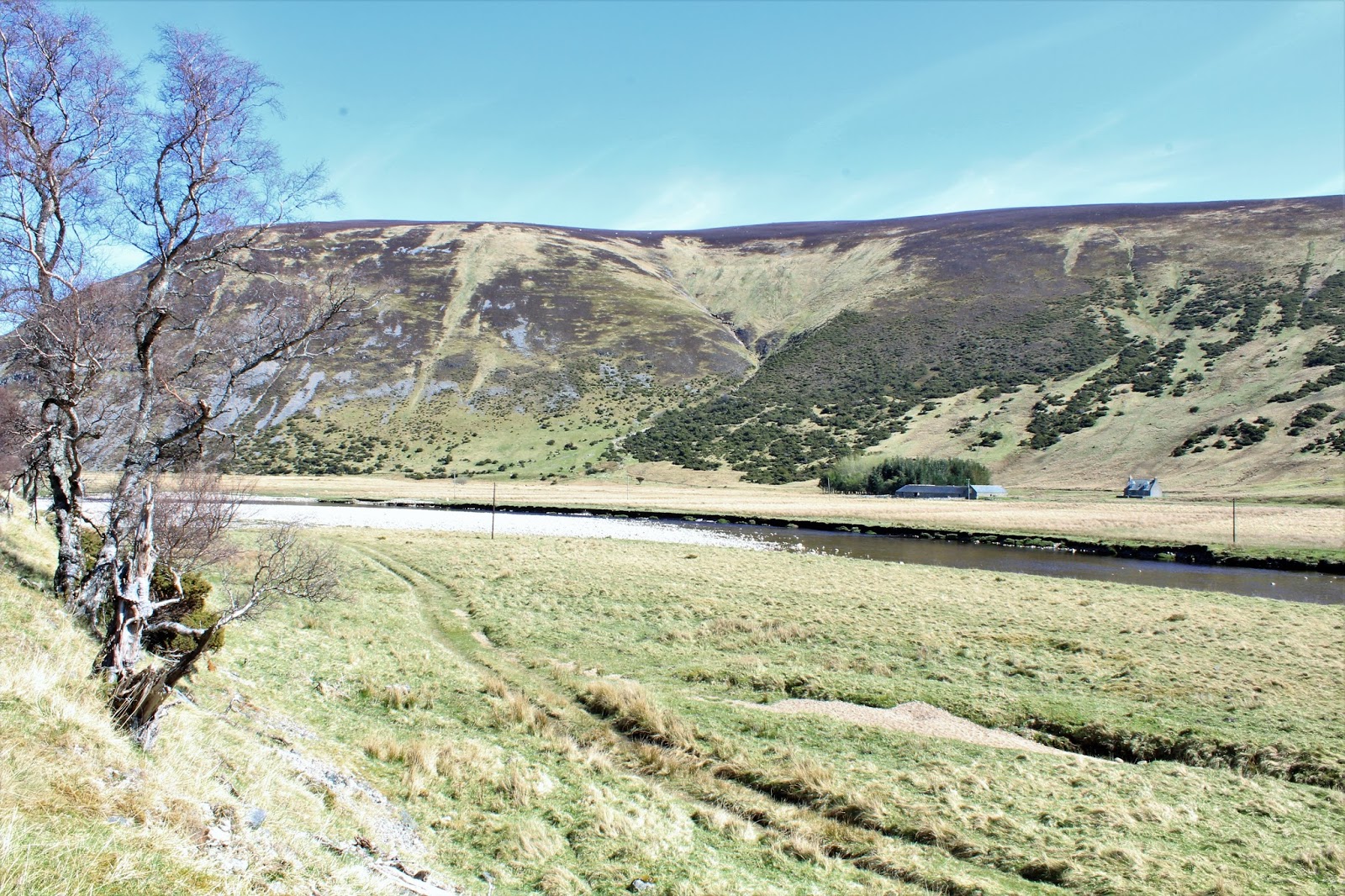
Buttercups as far as you can see


One of the disappointments of the walk along the canal was the complete lack of any Dragonflies or Damselflies. There was plenty floating and marginal vegetation so I was expecting at least a few  Blue-tailed Damselflies or maybe Large Reds. I also had outside expectations of some Red-eyed Damselflies as they occur on other parts of the canal. But no, absolutely nothing at all. Very disappointing.

Turning off the canal I walked down Pendlebury Lane where I had plenty finches and sparrows, including Tree Sparrows. This is one of the few locations in the Borough where you can see this species, and they were showing off in style, scrapping in the hedges. I had hoped for a Yellow Wagtail or two in the fields. They could have been there, but the height of the vegetation stopped me seeing much in many of the fields. I also thought I might have had an outside chance of Spotted Flycatcher (seem to remember seeing one in the area when I was a teenager!!!) but unfortunately not.

About halfway down this lane is a huge old railway bridge, known locally as the twenty bridges due to the number of 'arches'. Its a pretty impressive structure and the area around it used to be fenced off - not  that it stopped me going in. Today there are no fences and the area is totally open, so I had to have a mooch. Needless to say the area has changed massively since I was last there 20+ years ago. The river here always had a Kingfisher on it, and it still looked good for one. Even better in fact. I didn't spend long and will need to go back to have a better look. I remember that the number of thrushes used to be incredible in winter, as there was so much Hawthorn in the area. Now I know I don't need to squeeze through a gap in a fence I'll have a look again in November and December.


From here it was a pretty quiet walk back to the car, but it was a very enjoyable couple of hours. The species list wasn't massive, but it was bigger than my usual patch and I missed a few that I really shouldn't have. I'll definitely be back.

Tuesday, 2 May 2017

Scotland

Instead of my usual spring trip to Spurn, this year I decided to head up to Scotland to try to tick off some Scottish specialities. Namely Crested Tit, Ptarmigan, Capercaillie, Scottish Crossbill and possibly Dotterel. I knew it was a big ask - I only had three days including travel, but really wanted to get up to the highlands for some birding.

I left home at 03.30 on Tuesday morning to try to beat as much traffic as I could and maximise my time up in the Highlands. It worked and I was on Cairngorm Mountain railway car park by 09:50, and that included a stop for something to eat. It would have been quicker but for some significant road works on the A9. I got myself a ticket for the railway and boarded the train to the summit cafe.


Views from the Funicular Railway Car Park


On the Train


 Amazingly I bumped into a birder who I recognised from Spurn who was also heading up and we had a good chat as we made our way onto the viewing area of the Ptarmigan Café at the top of the railway. You are not allowed out of the station/café after 1st May unless you are booked on a guided walk, for reasons I can totally understand, so you just view from the veranda. And, to my surprise there were loads of birders there and, within minutes one picked up a Ptarmigan. The quickest tick I've had in ages. A few minutes later another one put in an appearance. Both still had quite a bit of white on them but were clearly moulting into summer plumage.  Sadly they were quite distant and I had left my phoneskope adapter in the car. I could easily have gone straight back down now the main target was in the bag, but it was stunningly beautiful up there. The weather was warm and bright, and although it was hazy the views were still very good.


We also had a couple of Ring Ouzels but that was it. I knew I'd be lucky to see Dotterel from the café, and I think it is probably a touch early anyway, and there were no reports of Snow Bunting so after an hour and a half I headed back down and straight onto Loch Garten RSPB.


I was mainly going to Loch Garten just to sus out the way ready for going on the Capercaillie watch at 05.30 in the morning. But, I was hoping for Crested Tit and Osprey maybe. I eventually managed to see the male Osprey flying around. A bit distant, but based on what the RSPB staff were saying, early morning is best to see him bring food in, so my fingers were crossed for the next day.

Osprey's Nest from the Loch Garten Reserve Hide


I thought I had a glimpse of a Crested Tit from the hide but couldn't be sure. The staff said they had been coming to the feeders just outside the hide but I wasn't so lucky. After about an hour, and once the Osprey had performed a bit I headed off around the reserve. I have been listening to Crested Tit calls and song for about a week now in preparation and it was time well spent. About half an hour from the main car park I heard a bird singing and eventually got onto it as it fed amongst the higher branches, before finally dropping down to give pretty good views. Sadly no photo's as it was just too quick! I did manage a couple of a Chaffinch and a Willow Warbler.


I have to say that the Caledonian Forest habitat is stunningly beautiful, as is the whole of the Cairngorms area. Abernethy in particular was really amazing.


The last picture above is of a 'veteran' Scots Pine of which there were many. I'm guessing it must be well over a hundred years old, minimum.

Day two and I was at the Loch Garten centre for 05:30 for the Capercaillie watch. Total waste of time as there was a heavy mist with views limited to less than 100m. After an hour I abandoned it and went for a wander along the track that leads to Forest Lodge deeper in the woods. I did manage to hear a Capercaillie - a female calling not too far off - but no sightings. There were plenty Crested Tits around, along with Redstarts, Tree Pipits and loads of Siskins. Coal Tits are ubiquitous!


Male Redstart


At 08:30 I decided to go to another site I had been told holds Capers, so went to suss it out with the intention of going the next morning. This next site was much more 'public' and at 09:00 there were dog walkers, joggers and cyclists everywhere. But I had it on good authority that the birds were here so, happy I knew where I was going next day, I moved on again. Next stop was a small lochan for Slavonian Grebes. I found them almost instantly, albeit quite distant. Absolutely stunning! I have never seen them in breeding plumage before so a nice first. I did try a shot through the scope, but it was quite breezy and the blurring was too much. As I was stood looking at the Grebes I heard a rustling in the grass on the shoreline. A stoat was running towards me, completely oblivious of my presence. It got to within about three feet then stopped dead. We stared at each other for a few seconds, then as I moved to get my camera, it shot into the vegetation right along the waters edge. A really intimate moment! Happy with my views of the Grebe's I went off to the Findhorn Valley in the hope of some raptors.

The drive along the valley is amazing. The scenery is again stunning. There are only limited places to stop and look for raptors (or anything else) as its a single track road with passing places, but eventually I found a spot where I could reverse the car, get out of the wind and see 90% of the valley.

The Findhorn Valley


My suntrap for the afternoon


To be honest, it wasn't brilliant, even though the weather must have been producing some excellent thermals. However I stayed put for nearly three hours, the whole stay made more tolerable due to me having got into the habit of taking my Jetboil, sachets of 2in1 coffee and a bottle of water everywhere!


Sadly on the raptor front I only saw a single Golden Eagle very distantly, plus a Kestrel and Common Buzzard. I did manage to see displaying Common Sandpipers though, as well as my first Common Tern of the year and a pair of Dippers when I stopped at a spot on the way back. Just as I was packing my car ready to leave I heard an incredible noise coming from down the valley. I had no idea what it was - possibly one of the large tractors I'd seen elsewhere? A few seconds later I found out what it was. A Hercules C130 doing a low flying exercise. And I mean low. I could see the pilot quite clearly. I couldn't get my camera out quickly enough, even my phone - but did mange this shot which gives an idea how low it was (imagine I'm on the road next to where the plane is, and then consider the plane had started to climb quite steeply by this point)!


On the way back to the B&B I called back in at Loch Garten - not the main car park - for a quick look for Crossbills. I heard them but couldn't see them. But the view from the Loch shore at that point more than made up for missing them.


Last morning and I was at the site I'd been tipped off about. I was there before first light but sadly no signs of Capers at all. On the plus side I did see Badger on the way there, and two Red Squirrels chasing around a tree was entertaining. I also got some close up views of Roe Deer. Then, just as I was heading back to the car I heard a familiar 'chup chup' call from the top of a pine. Sure enough there were six or seven Crossbills. I managed to get them in the scope to check their bills. They clearly weren't Parrot Crossbill, but the bill did look quite big. I managed a bit of a recording of their calls, so I'm going to ask a friend to analyse it with his software to check that these were in fact Scottish Crossbills rather than Common Crossbills.

That was it. End of the visit. I had the prospect of 5 1/2 hours driving in front of me without traffic, so to try to avoid hitting the worst of it I left at 07:30 and was back home at 13:00.

I stayed here at the Beinn Sealladh B&B and have to say it was excellent. Very clean and comfortable. Really friendly owners and great value.

Saturday, 29 April 2017

Pallid Harrier

A male Pallid Harrier had been reported from Bowland near Dunsop Bridge earlier this week. I had thought about going yesterday (Friday) on the way back from work but decided I didn't have time to get there before dark. I had a list of jobs I needed to do today and, seeing as I'm heading off to Scotland next week for a few days birding I didn't expect to get a pass out today. Anyway, I somehow managed to get all my jobs done by early afternoon and was out with the dog when I noticed a tweet from a birder saying the bird was showing well and was really worth seeing. So, I chanced my arm and put the suggestion to my other half who, remarkably, didn't raise any objections. I didn't need any encouragement. It was 15.30 and I reckoned it would take me an hour to get there, plus at least a 45 minute walk to the actual site, so I was pushing it but set off anyway.

At 16:45 I pulled into the car park at Dunsop Bridge. I quickly changed into my boots, grabbed my bins and scope and set off for the yomp up to where the bird was. Its a pity I had to walk so fast; the valley is a brilliant birding location and there's always plenty to keep a birder interested on the walk, but I didn't have time. I was literally walking as fast as I could. On the way up I bumped into two birders I know, both told me the bird was still showing which was encouraging.

The last bit of the trek is up a short sharp climb and by the time I got to the point where it levelled out I was pretty hot and had a sweat on. Just before the top a dog walker stopped me and said the birders at the top had been watching a 'sea eagle' I said 'Do you mean Pallid Harrier?' 'No, definitely a sea eagle' was his reply. I almost sprinted the last bit. Three birders were stood overlooking the valley, pretty much in the exact same place I spent a few hours looking for the Eagle Owl a few years ago. They confirmed they had seen the bird and had also had the Eagle. One of them showed me a picture and there was no doubt.

Within two or three minutes the main reason for my visit put in an appearance. What a beautiful bird! It was so pale, crisp, and clean. It glided across the opposite slope and perched up for a few minutes giving great scope views. I had decided not to carry my phoneskope attachment, and had opted for my bridge camera instead of the DSLR. Big mistake. Although the extra zoom should have been useful in theory, the lack of manual focus and manual controls meant I couldn't get any decent shots. I did manage a handheld shot on my phone through the scope.


The bird performed brilliantly and even did a bit of sky dancing. It was just an awesome bird. Well worth the effort. Just hope it manages to survive its stay. As for the White-tailed Eagle. Nothing.

Saturday, 4 March 2017

Lancashire Birding

I decided to try for the Hawfinches at Sizergh today. I tried for them last year, but I was probably a bit too late both in terms of time of year and time of day.

March is prime time for them at this site, and this time I was not going to sleep in; I intended to be there by 08:00 - any earlier and the gates might still be closed, later and I'd miss them again.

So, at 07:15 I was north bound on the M6. After negotiating the Saturday drivers on the motorway (what is it about people using the motorway on a weekend? They just cant drive) I drove into the car park at 08:15. The first thing I noticed was the bottom of the car park cordoned off. I took this as a good sign as some info on the Web suggested the National Trust do this to prevent the Hawfinches getting disturbed. The next thing I noticed was a group of birders on the café veranda. Another good sign I hoped.

I quickly grabbed my gear out of the car and walked over to the veranda. As I was walking over a birder motioned for me to look in the trees behind the café - a single bird was perched high in the tree tops. I saw it, but had very limited views and I hoped that it wouldn't be the best view of the day.

I stood on the veranda for perhaps half an hour, during which time I chatted with the National Trust Warden, who's sort of made the Hawfinches his project and who is responsible for the Hawfinch watches. Its great that the NT have embraced these birds and are making them accessible to birders. Anyway, the Warden is obviously very tuned into the Hawfinch calls because he picked up on one coming over us from behind (I didn't hear it) and then, there it was. Perched in the tree in front of us. The next minute it was on the floor feeding on Hornbeam seeds. Better views than I could have hoped for.


Hawfinch


Both the above images were phonescoped using an iPhone6 through a Leica Televid 77APO with 32x eyepiece.

The bird stayed feeding for about 15 mins before flying off over the café. So, at this point I decided to move on.

I hadn't decided where to go for the rest of the day but, inevitably I suppose, I ended up going to Leighton Moss. As is usual at this time of year, the place was pretty quiet bird wise, but crawling with 'people'. I wont say birders, or even general public. It was crawling with photographers. I only went to the causeway hide on the main reserve and that was enough. Well over half the people that came in had huge lenses stuck to DSLR's. The noise from their shutters on rapid fire is engrained on my brain and I'll be hearing it in my sleep. Now, I've nothing against birders who carry a camera (I carry one), and  I've nothing against anyone using a camera. But, taking 100's of shots of a Mute Swan with continuous shooting of 10 frames per second is not necessary!!! Thankfully most did not seem to be the type of photographer that (too often these days) tries to get so close to stuff they disturb it. But, the incessant shutter noise is a real pain.

A nice distraction on the walk back to the car was a small patch of Scarlet Elf Cup fungi tucked away down the side of the boardwalk.

Scarlet Elf Cup


Once back at the car park,  I opted to head to the coastal marsh hides. It was much quieter here, in terms of people and birds!! A Greenshank was probably the best bird. Saying that, its amazing that 10years ago the two Avocets on the pools would have been THE star bird, and a real local rarity. Now, I almost expect to see them!

Avocets


My two favourite ducks were also present in good numbers - Wigeon and Pintail. Both are stunning.

After an hour or so it was time to move again. This time down to Woodwell - I'm sure the woods are not actually called that, but that's what I call it. Its only a small spot, but it used to get Hawfinches. Sadly Hawfinches seem to have disappeared now, but Nuthatch, Marsh Tit and Tree Creeper are almost guaranteed and its just a really cracking bit of woodland, and sure enough, all the latter three target species appeared within about 10mins!!

Half an hour spent in woodlands like this really nourishes the soul!!


All in all a really good day.